Wearable technology has become an important part of modern life, and smart glasses are one of the most interesting developments in this category. The best smart glasses can combine the familiar design of everyday eyewear with useful technologies such as wireless connectivity, built-in audio, microphones, cameras, and AI-powered functions. Instead of constantly reaching for a smartphone, users can access selected features directly through their glasses, creating a more convenient and hands-free experience.
What Are Smart Glasses?
Smart glasses are wearable devices designed to look and feel similar to conventional eyewear while incorporating electronic technology into the frame. Depending on the model, they may include speakers, microphones, cameras, touch controls, voice assistants, or other smart features.
Unlike bulky augmented-reality headsets, many modern smart glasses are designed to look like regular glasses or sunglasses. This makes them suitable for everyday activities such as commuting, traveling, working, listening to music, making calls, and capturing photos.
The technology available can vary considerably between products. Some smart glasses focus primarily on audio and communication, while more advanced models add cameras, AI assistance, translation, or visual displays.
Why Are Smart Glasses Becoming Popular?
The popularity of smart glasses is closely connected to the growing demand for hands-free technology. Smartphones are powerful, but users often need to stop what they are doing to check a notification, answer a call, play music, or access information.
Smart glasses can move some of these interactions directly to the user's field of use. Open-ear audio, for example, allows users to listen to music, podcasts, or calls while remaining aware of surrounding sounds. Modern smart glasses can also use Bluetooth to connect with smartphones and other compatible devices.
For travelers, creators, professionals, and technology enthusiasts, this combination of convenience and portability can make smart glasses an appealing addition to an everyday tech setup.
Important Features to Look For
Finding the right smart glasses requires more than simply choosing a stylish frame. Several technical and practical features should be considered before making a purchase.
AI Assistance
AI has become one of the most exciting additions to smart eyewear. Depending on the device, AI features may help users interact with voice assistants, ask questions, translate information, or understand objects and surroundings.
AI functionality can make smart glasses more useful for everyday tasks because users may be able to access assistance without holding a smartphone.
Built-In Audio
Audio is another major feature found in many smart glasses. Speakers integrated into the frame can provide music, podcasts, navigation instructions, and phone calls.
Open-ear audio is particularly useful for people who want to hear their surroundings while listening to content. This can be convenient when walking outdoors, working, or traveling.
Camera Technology
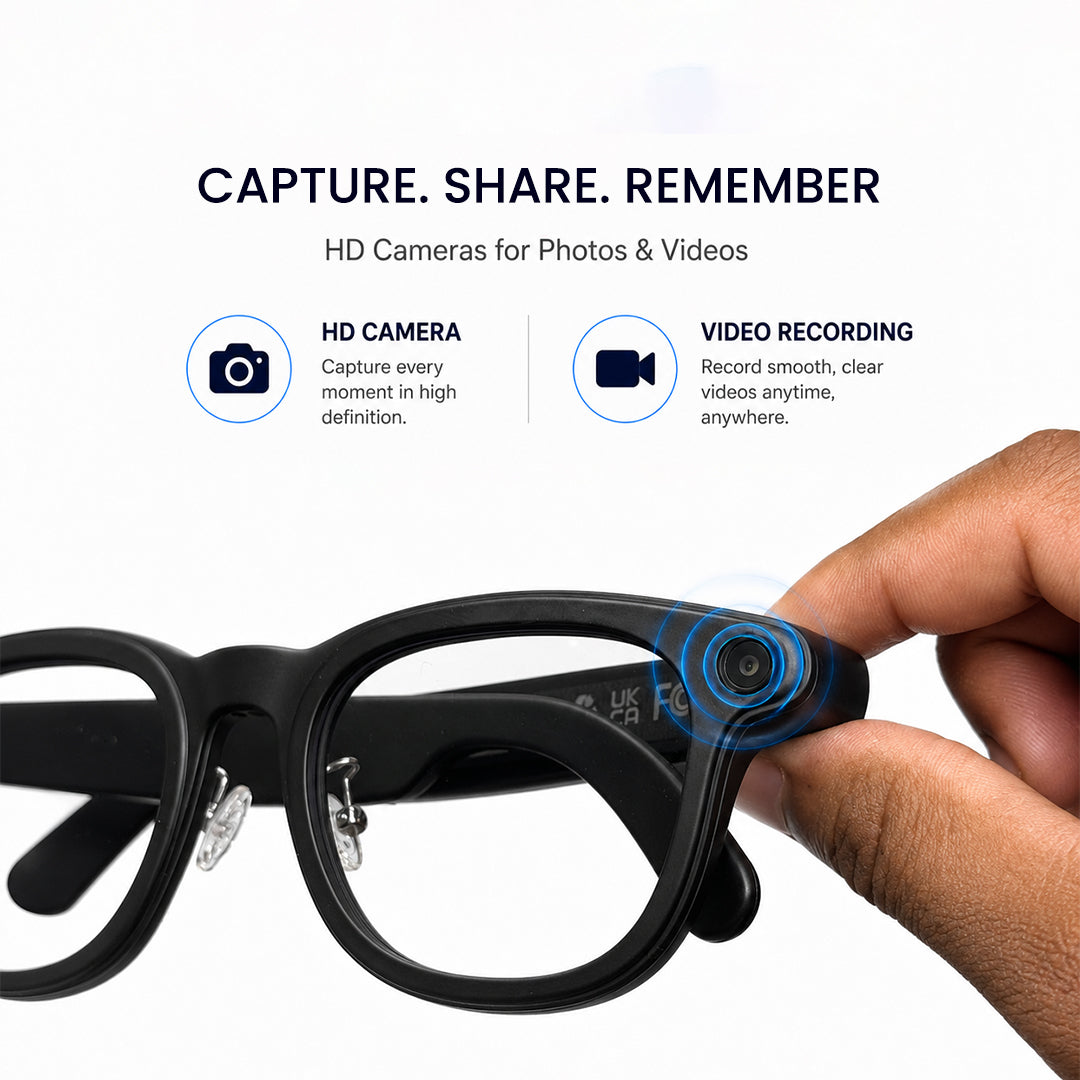
Some smart glasses include built-in cameras that allow users to capture photos and videos from a first-person perspective. This can be useful for travel, casual content creation, memorable moments, or documenting activities.
Camera quality can vary significantly between models, so shoppers should look at resolution, stabilization, video capabilities, storage, and how easily captured content can be transferred to a phone.
Voice and Call Support
Integrated microphones can make hands-free communication possible. Users may be able to answer calls, communicate with voice assistants, or record supported audio features without taking their phone out.
Good microphone performance is particularly important in environments where background noise can affect communication.
Comfort Matters as Much as Technology
Even a feature-rich pair of smart glasses may not be useful if it becomes uncomfortable after extended use. Because glasses sit directly on the face, weight distribution and frame design deserve serious consideration.
Look for lightweight frames, comfortable nose support, flexible temples, and a design that feels balanced. Users who plan to wear smart glasses throughout the day should prioritize comfort rather than choosing a product based solely on its list of specifications.
Lens options are also worth considering. Some products provide replaceable lenses or support prescription lenses, making them more adaptable for different users.
Connectivity and Compatibility
Bluetooth connectivity is an important part of the smart-glasses experience. Many devices rely on a smartphone connection for functions such as audio streaming, calls, app controls, updates, or AI services.
Before buying, check whether the glasses support your smartphone and operating system. A reliable companion application can also make it easier to configure settings, manage features, transfer media, and install updates.
A good wireless experience should be simple rather than complicated. Ideally, pairing should be straightforward and the connection should remain stable during normal use.
Battery Life and Charging
Smart glasses contain electronic components that require power, so battery performance is another major consideration.
Battery life depends on how the glasses are used. Continuous audio, calls, camera recording, AI functions, and other features can consume different amounts of energy.
Some smart glasses include charging cases that make it easier to recharge while traveling. For people who spend long hours away from a power outlet, a larger-capacity charging solution can provide additional convenience.
It is worth checking both the glasses' operating time and the charging method before purchasing.
Smart Glasses for Travel and Everyday Use
Travel is one area where smart glasses can be particularly useful. A lightweight wearable can provide access to audio, calls, translation features, and hands-free photography without requiring users to constantly handle their phone.
Translation technology is also becoming increasingly common in smart eyewear. Some products are designed to support real-time translation across multiple languages, potentially helping travelers communicate or understand unfamiliar information.
For everyday users, smart glasses can also be useful during walks, commutes, shopping, work breaks, and other routine activities.
Choosing Smart Glasses for Content Creation
Content creators may appreciate smart glasses because cameras built into the frame can provide a natural first-person perspective. Instead of holding a smartphone or action camera, users can capture moments from their own point of view.
However, creators should carefully evaluate camera resolution, video quality, stabilization, storage, battery life, and transfer options.
Smart glasses are not necessarily a replacement for professional cameras. Instead, they can complement existing equipment by providing spontaneous hands-free footage.
Privacy and Responsible Use
Cameras and microphones make smart glasses powerful, but they also require responsible use. Users should be aware of their surroundings and respect other people's privacy when recording photos, video, or audio.
Look for devices that provide clear recording indicators and understand the manufacturer's privacy policies before using AI or cloud-connected features.
Being considerate when recording in public spaces can help ensure that smart eyewear remains a useful technology without creating unnecessary privacy concerns.
What Makes the Best Smart Glasses?
There is no single pair that is perfect for every person. The right choice depends on what you want from the device.
Someone who primarily wants wireless music and calls may prioritize comfortable open-ear speakers and strong Bluetooth connectivity. A traveler might place greater importance on translation and AI features. A content creator may focus on camera quality and video stabilization.
For users looking for a broader combination of features, best smart glasses can offer a balance of AI assistance, hands-free communication, wireless connectivity, and everyday eyewear design. Airmars also lists features such as 130+ language real-time translation, dual microphones, changeable lenses, blue-light filtering, and a high-capacity charging case.
Tips Before Buying Smart Glasses
Before making a purchase, create a simple checklist. First, identify the features you actually need. Avoid paying extra for functions you are unlikely to use.
Next, check compatibility with your smartphone and review battery expectations. Examine the frame design and available lens options to make sure the glasses will be comfortable for regular use.
It is also useful to consider warranty, return policies, customer support, and replacement options. Smart eyewear contains electronic components, so after-sales support can be just as important as the initial specifications.
Finally, consider whether the product's design fits your personal style. Since smart glasses are worn publicly, appearance can be an important part of the overall experience.
Final Thoughts
Smart glasses represent an evolving category of wearable technology that brings digital features closer to everyday life. From wireless audio and hands-free calls to cameras, AI assistance, and translation, modern eyewear can provide functions that once required several separate devices. When comparing the best smart glasses, focus on comfort, connectivity, battery performance, camera capabilities, AI features, lens options, and overall usability rather than choosing based on specifications alone. The right pair should feel natural to wear while providing practical technology that genuinely improves your daily routine.
Comments on “Best Smart Glasses: A Complete Guide to Choosing Modern Wearable Technology”